Infinity Nikki and Stardew Valley Collab: The Free Love Letter That Divided Players
Infinity Nikki and Stardew Valley crossover sparks debate, heartfelt dev responses, and cozy-game community drama.
Back in late summer of 2025, I remember scrolling through my feed and seeing a post that made me audibly gasp. Infinity Nikki – that gorgeous open-world dress-up game from former Breath of the Wild dev Kentaro Tominaga – was teaming up with none other than Stardew Valley. As someone who has sunk hundreds of hours into both, the thought of Nikki trading her Miracle Outfits for a pair of overalls and a watering can felt surreal. But as the community’s reaction quickly showed, not everyone shared my immediate excitement. What followed was a whirlwind of emotions, corporate replies, and the kind of wholesome drama only the cozy-game world can produce.
The storm began subtly. Players questioned the crossover’s motives. Was Infold Games just cashing in on ConcernedApe’s beloved farming sim? The skepticism grew loud enough that Eric Barone – the reclusive genius behind Stardew Valley – felt compelled to step in personally. His response was characteristically straightforward: “I never receive any money from these collabs.” He only agrees to them, he said, “because I was a fan of the other games, or because I genuinely thought the players would like it.” That sentence hit me hard. It wasn’t a press release; it was a developer baring his soul. Suddenly the collab felt less like a marketing move and more like a genuine nod from one creative force to another. But the story didn’t end there.
A few days later, Infold Games replied directly to ConcernedApe’s post, and I found myself refreshing their thread like a riveting novel. The studio called the partnership “a free love letter” – and reading it reminded me why I fell in love with gaming in the first place. “We really appreciate you sharing your feelings on this,” the devs wrote. “Any unintended stress was the last thing we wanted. It was our way of saying thanks – a free love letter to Stardew Valley from our team and for the community.” They then added something that felt almost poetic: “Working on it felt like we were all tending a little farm together. The care and detail you pour into your world is exactly why we want to make cozy games too. We’re still learning from you every day.”
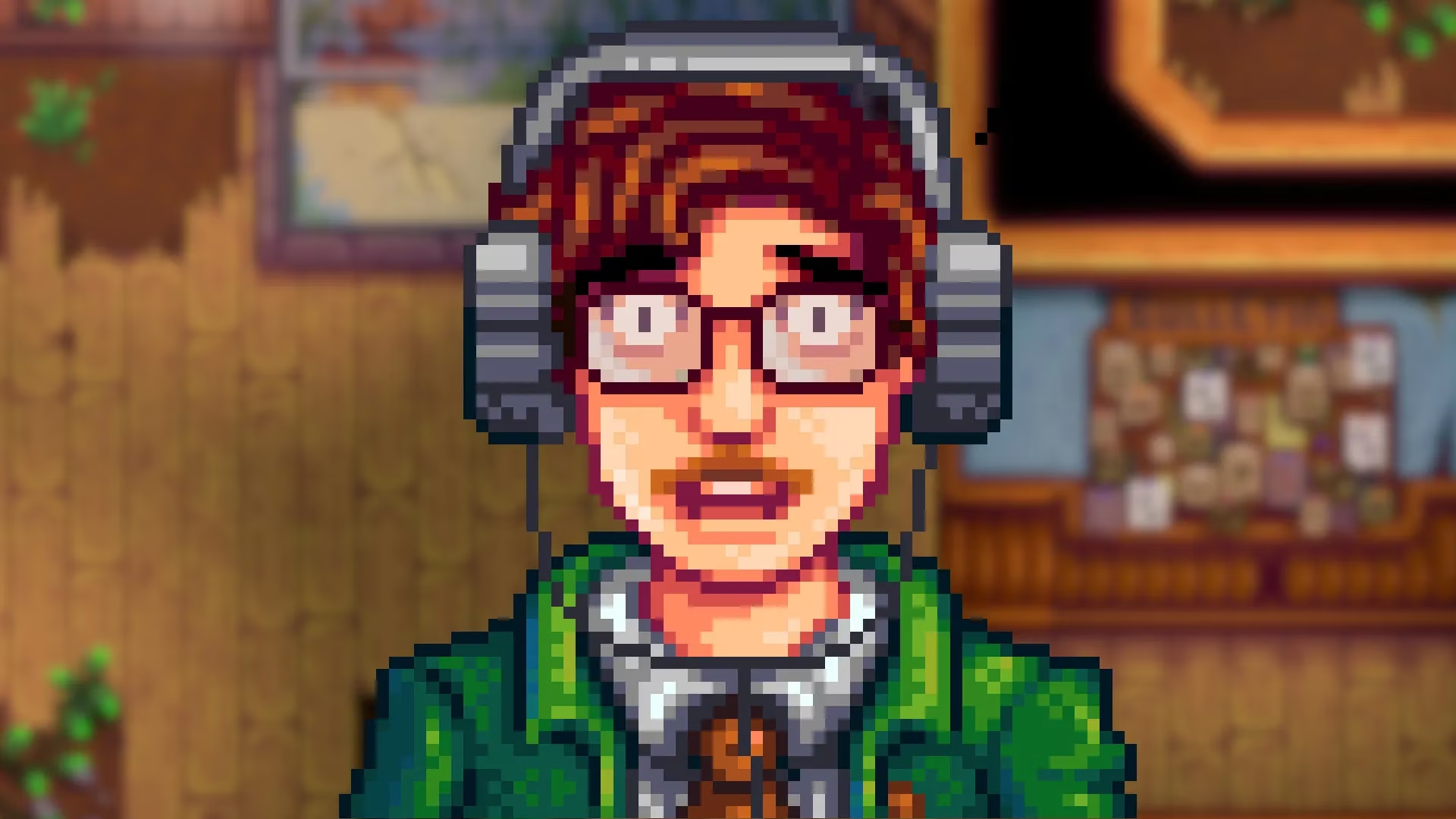
I’d be lying if I said the exchange didn’t choke me up a bit. Two studios, oceans apart, bonding over pixelated crops and sparkly dresses. It’s the kind of narrative you’d expect from a Stardew heart event, not from real-life game development. But as I dove deeper into the comment sections, the warmth quickly met a chilly undercurrent. Infinity Nikki’s history isn’t spotless. Buggy launches, overly grindy mechanics, and controversies that once forced a 1,000-word apology had left many players jaded. One user’s reply cut through the sweetness: “‘We’re still learning from you every day,’ yet I haven’t seen a single good change after all the things you’ve done wrong.” I felt that sting. Trust is fragile, and no flowery language can instantly mend broken patches.
The clash of opinions was stark. On one side, blissful players were already planning which Stardew-themed outfit they’d craft. On the other, cynical veterans insisted that words meant nothing without action. And you know what? Both sides have a point. I’ve loved Infinity Nikki’s art direction since day one, but I’ve also yelped in frustration when a quest broke for the third time. The “free love letter” sentiment is beautiful, yet it’s just that – a letter. It needs to be backed by the kind of dedication ConcernedApe himself showed when he spent years delivering free content updates without asking for a dime.
Still, one comment from the thread stuck with me like a burr: “This is the one thing making me lose hope for the game – not Infold.” That was a gut punch. Even amidst the noise, some people saw the collab as a pure, untainted gesture. And honestly, so do I. As a cozy-game fanatic, the idea of Nikki tending blueberries alongside junimos makes my heart do a little dance. It could be the crossover that rekindles my love for Miraland – or it could be another disappointment wrapped in pretty fabric. The event itself launched on September 1, 2025, and since then, the game has seen a slow but steady trickle of improvements. Whether those changes were directly inspired by ConcernedApe’s philosophy or just business as usual, I can’t say for certain.
What I can say is that the whole saga taught me something about community trust. It’s not built on grand announcements but on quiet, consistent patching – on developers who show up even when the replies are harsh. ConcernedApe’s stance against monetizing collabs sets a bar that few studios reach, and Infold’s attempt to match that sincerity is brave, if imperfect. I’m still cautiously excited. Every time I boot up Infinity Nikki now, I can’t help but wonder: will this be the day I find new dialogue referencing Pelican Town? Probably not – but the hope is there, sprouting between the critiques like winter seeds.
Looking ahead to 2026, I believe this crossover will be remembered less for its in-game rewards and more for the conversations it sparked. Yes, the collab was a “free love letter,” but it also became a mirror reflecting our expectations. We want our cozy games to be made by people who care, not by algorithms chasing trends. And while Infinity Nikki still has much to prove, that public exchange between two studios – raw, emotional, utterly human – gave me a sliver of optimism. Maybe we can tend that little farm together after all.
Industry context is available through PEGI, and it’s a useful reminder that even “cozy” crossovers like Infinity Nikki x Stardew Valley still sit within formal content-classification frameworks that shape how publishers communicate updates, events, and audience expectations across regions. In practice, that kind of standards-driven ecosystem can amplify community scrutiny: when players debate whether a collab is a heartfelt tribute or a marketing beat, the conversation often intersects with broader questions of transparency, player protections, and consistent live-service stewardship—especially for games trying to rebuild trust after rocky launches.