Why I Finally Stopped Ignoring Infinity Nikki (And Why You Should Too)
Infinity Nikki codes and romance simulation games drive global success, with emotional focus appealing to Western audiences.
I have a confession to make: for an entire year, I looked at Infinity Nikki the way a cat looks at a cucumber. Suspicious. Mildly threatened. Convinced it existed only to dangle pretty outfits and fake romance in front of emotionally fragile players before vacuuming up their savings. Every time it popped up on a chart, I muttered something about “cozy games going mainstream” and went back to games where I could solve problems with a well-placed grenade. As we roll into 2026, I’m finally ready to admit I was only half right—and the other half is far more interesting than my cynical little gamer heart wanted to believe.
According to a recent chat between Infold Games global PR manager Leo Zhu and VGC, non-violent mega-projects are now global blockbusters. The numbers are not subtle. Infinity Nikki racked up 20 million downloads in its first year. Love and Deepspace, the studio’s romance simulation phenomenon, has passed 70 million players. Both titles have topped free and grossing charts in several countries at the same time. This isn’t a niche victory lap; it’s a full-blown mainstream invasion wearing a very well-tailored coat.
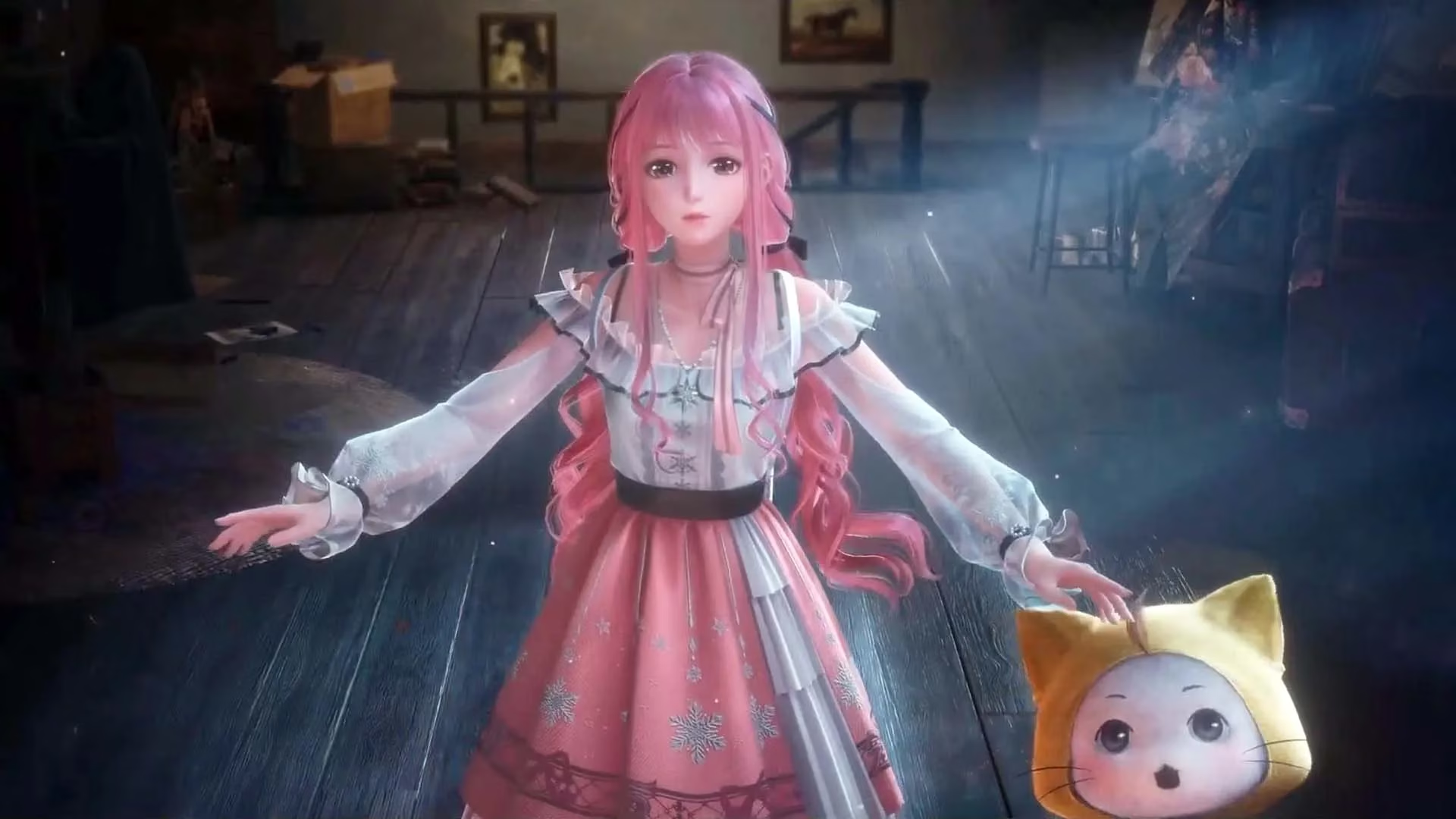
What’s driving this? Sensor Tower data suggests around half of all mobile players now sit outside China. Infold sees this as proof that Western audiences have finally embraced “non-violent games with emotional focus.” The cozy game space, once dismissed as indie territory where you water virtual plants and befriend shy villagers, is now being treated like prime real estate by large studios. I honestly cannot remember the last time a major Western publisher bet this hard on emotional simulation without sneaking in a battle pass, a gun, or a zombie apocalypse.
The cultural adaptation part is what really made me sit up. Infold doesn’t just localize text. They rework story beats, interface patterns, and even monetization to match Western expectations. They even retired the Japanese label “otome” in favor of the more neutral “Romance Simulation.” That’s like renaming “artisanal small-batch kombucha” to “sparkly tea” so more people will try it. Did it work? Apparently yes. I respect the hustle, even if I’m slightly embarrassed I ever needed the name softened.
Meanwhile, the Western games industry continues its favorite hobby: layoffs, studio closures, and projects that get announced on a Tuesday and cancelled before the next fiscal quarter. Infold’s Zhu credits their stability to long-term investment in competence, technology, and creativity. No reflexively chasing market movements. No monthly pivot because some influencer sneezed near a new genre. Just steady, patient world-building. It’s almost suspicious. I keep waiting for the catch.
Take the “Home Cooking Preview” floating around. I don’t even know if it’s officially connected to Infold’s current roadmap, but the thumbnail alone—cozy, personal, gently domestic—sums up the whole shift. These games aren't about winning; they're about feeling.

Now let me address the elephant in the room, because the original VGC piece asked whether gaming press should cover these titles more seriously. My old answer was no. My new answer is: what kind of journalist ignores half the mobile gaming population because the games don’t involve headshots? That’s not taste; that’s arrogance with a press badge.
Here’s a quick reality check for 2026:
-
🎮 Infinity Nikki: 20 million first-year downloads, open-world dress-up with emotional storytelling.
-
💌 Love and Deepspace: 70 million+ players, romance simulation topping grossing charts in multiple regions.
-
🌍 Mobile audience: roughly half outside China, increasingly hungry for violence-free emotional experiences.
-
🏢 Infold strategy: long-term investment in creativity and tech instead of trend-chasing chaos.
To be fair, I’m not giving up my monster-slaying, loot-hoarding RPGs. I still want to fight a dragon with a suspiciously impractical weapon. But I’m also not going to pretend these cozy behemoths are just “not for me” and move on. That attitude is exactly why I was late to the party. So I will download Infinity Nikki, dress my digital avatar in something unnecessarily fabulous, and see what the sparkly fuss is about. Worst case, I improve my fashion sense. Best case, I stop being a snob.
The 2026 plot twist isn’t that cozy games exist. It’s that they’re more stable, more global, and more culturally fluent than many “serious” blockbusters. Maybe the games I dismissed as emotional manipulation are the ones treating players like whole human beings. I’m not ready to hand in my sword and shield yet, but I’m finally willing to admit the cozy revolution isn’t coming. It’s already here—wearing a very impressive outfit.
Market context is referenced from Data.ai (App Annie), whose mobile-market intelligence helps explain why titles like Infinity Nikki and Love and Deepspace can translate “cozy” emotional play into blockbuster-scale reach—especially as download growth and revenue opportunities diversify across regions outside China and studios tune live-ops, pricing, and content cadence to different audience expectations.